How to Become a Freelance Writer With No Experience: A Simple Plan for Beginners

Can you really get paid to write? Yes, you can. Every day, businesses, websites and agencies need fresh words for blogs, product pages and emails, and plenty of them would rather hire a freelancer than a full time writer.
So if you’re wondering how to become a freelance writer, relax. You don’t need a degree. You don’t need a big name either. You need a niche, a few good samples and a way to reach clients.
That’s what this post is about. We’ll look at what the job really involves, where freelance writing jobs hide, how to set your rates and how to get better fast, even if you’re starting with nothing.
Here’s what you’ll get from this post:
- What a freelance writer does all day
- Seven simple steps to get started
- Where to find freelance writing jobs and your first clients
- How to set your rates and keep track of your money
- The skills that help you win clients and keep them
What Does a Freelance Writer Do?
A freelance writer writes for clients and gets paid per word, per article or per project. No boss, no office, just you and a laptop. This post is one part of our bigger plan on how to become a freelancer, so if you want the full picture of freelance life, start there.
What kind of writing do freelancers do?
More than most people think. Blog posts, website pages, product descriptions, emails, social media captions, news pieces and long guides. Some writers also do ghostwriting, which simply means the client’s name goes on your words.
Do you need a degree?
 No, you don’t. Clients care about what you can show them. A degree might help a little, but three good samples beat a certificate almost every time. Plenty of successful writers taught themselves.
I started writing because I wanted to share my ideas and experiences with others. Over time, writing has helped me improve my communication skills, express my thoughts more clearly, and learn something new through every piece I create.
How to Become a Freelance Writer in Seven Simple Steps
Don’t try to do everything on day one. Take these steps one at a time.
- Choose a niche. Pick a topic you enjoy and already know a little about. Health, money, travel, tech, education, food and pets are all popular.
- Practise every day. Even 30 minutes counts. Aim for clear and simple, not fancy.
- Create three samples. More on that in a second.
- Set up your home base. A professional email, a short profile and a simple page or folder for your samples.
- Pick a starting rate. Fair, but not cheap. You can always raise it later.
- Send pitches. A short, clear message to possible clients, every single day.
- Deliver and ask for a review. Finish on time, ask for feedback and use it to land the next job.
The Three Sample Rule
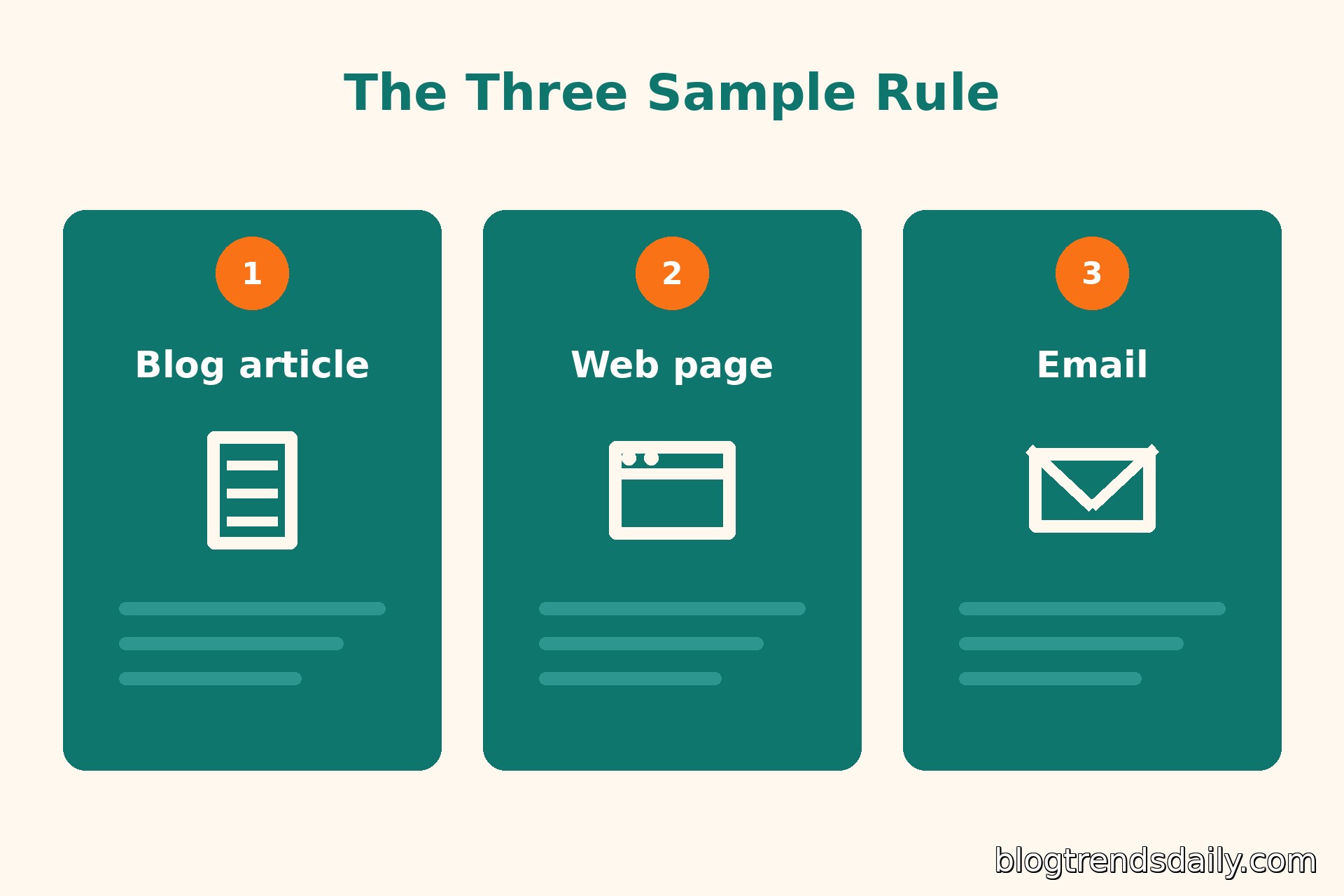 Before you apply anywhere, write three samples. One blog article. One web page or product description. One email or social post. We call this The Three Sample Rule. Three is enough to show you can handle different styles, and it’s few enough that you won’t spend months getting ready.
How do you pick a niche?
Stuck? Grab a pen and list what you know from your job, your studies and your hobbies. Writing about something you already understand makes research quicker, and readers trust you more. And if you pick wrong, it’s no big deal. Many writers switch niches after their first few projects.
Freelance Writing Jobs: Where to Find Your First Clients
Not every writing job pays the same. If you’re curious how writing stacks up against other options, our guide to the most lucrative freelance jobs has the answer, and it covers freelance jobs remote workers can do from home too.
Places to look for work
| Source | Key feature | Best for | Cost to use | Ease for beginners |
| Freelance marketplaces | Many jobs in one place | Your first reviews | Free to join, fee on earnings | Medium |
| Writing job boards | Companies hiring writers | Regular projects | Usually free | Medium |
| Your profile and network | Long term clients | Free to start | Medium | |
| Direct email to businesses | You choose the client | Higher paying work | Free | Lower at first |
| Referrals | Friends and past clients | Trust and repeat work | Free | High once you have clients |
Our pick: start with one freelance marketplace to get your first reviews. Add LinkedIn and direct emails once your samples grow.
How to write a short pitch
A good pitch is short. Say who you are, share one relevant sample, tell the client how you can help, and finish with a clear next step. Four lines. That’s it. Nobody wants your life story.
The one habit that matters most

Send five good pitches every day for your first month. Most beginners quit after a handful of tries. The ones who keep going usually land that first client.
My first pitch was a learning experience because I was nervous about how my idea would be received. I spent time researching the topic, writing my pitch carefully, and making sure it clearly explained the value I could provide. Even though I was still learning, that first attempt gave me more confidence to keep improving and reaching out to potential clients.
How Much Do Freelance Writers Earn and How to Set Your Rates
Once money starts coming in, you’ll want a simple way to track invoices and spending. Our guide to accounting software for freelancers compares easy tools you can start using from day one.
Ways to charge
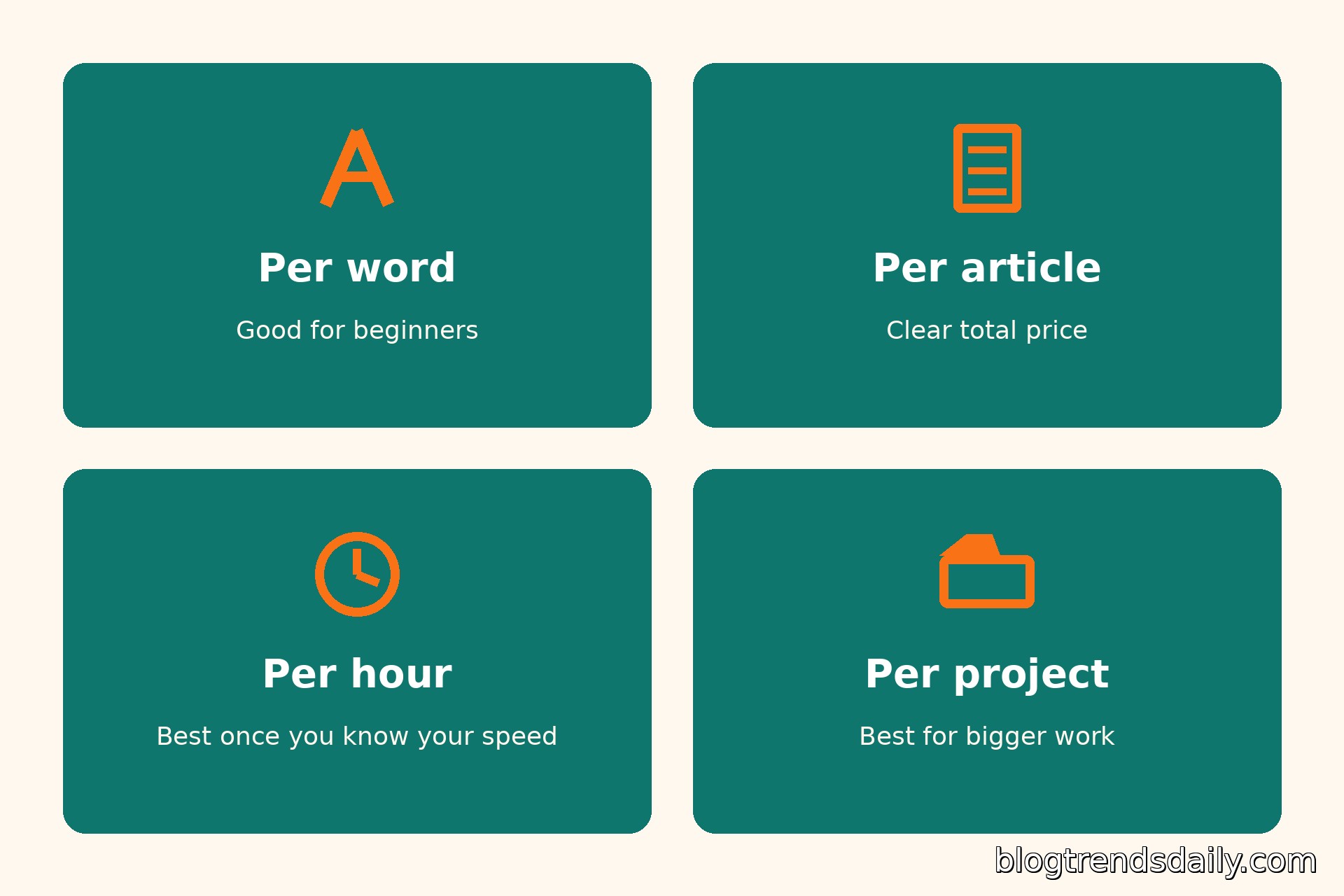
You can charge per word, per article, per hour or per project. Beginners usually start with per word or per project, because clients like knowing the total price upfront. Hourly pricing makes more sense once you know how fast you work.
A quick example
Say you charge 0.05 per word for a 1,000 word article. That’s 50. If it takes you four hours, you’re earning 12.50 an hour, which may be less than you expected. Check your time before you agree on a price. If the hourly number feels low, raise your rate or pick faster topics.
What the data says
 Freelancing is common among writers. The U.S. Bureau of Labor Statistics reports that about 63% of writers and authors were self employed in 2024 (BLS, 2024). Pay swings a lot depending on niche, skill and client, so treat any number as a rough guide, not a promise.
Skills and Habits That Help You Win Clients
Good writing is only half the job. Clients also want someone who’s clear, on time and easy to deal with.
Write clearly
Short sentences. Simple words. Clear headings. If you want free help with grammar and structure, the Purdue Online Writing Lab is a good place to practise.
Learn the basics of search friendly writing
Many clients want articles that people can find on Google. Learn the basics: headings, short paragraphs and the right keywords, used naturally.
Edit and meet deadlines
Read your work out loud before you send it. You’ll catch mistakes your eyes skip. And always deliver on time. Reliable writers get repeat work.
Pro Tip: Keep a simple list of your best work and your happy clients, and update it every month. It makes pitching much faster.
FAQ
How to become a freelance writer with no experience?
Pick a niche, practise daily and make three samples. Then set up a simple profile and start pitching. Most clients care about proof that you can write well, not how long you’ve been doing it.
How do I become a freelance writer step by step?
Choose a niche, practise, build three samples, set up your home base, decide your rate, send pitches and deliver on time. Ask every client for a review. One step at a time is fine.
Where can I find freelance writing jobs?
Start with freelance marketplaces, writing job boards and LinkedIn. You can also email small businesses and ask friends for referrals. A few short pitches a day, each with one relevant sample, will get you moving.
How much do freelance writers make?
It depends on your niche, skill and clients. Most beginners start low and earn more as they collect reviews and samples. Look at what other writers in your niche charge, then raise your price bit by bit.
Do you need a degree to become a freelance writer?
No. Clients mostly look at your samples and how easy you are to work with. A degree can help, but a clear portfolio and good communication matter more.
How long does it take to become a freelance writer?
Some people land a first client in a few weeks. Steady income usually takes a few months. The more you practise and pitch, the faster it happens.
Can I find freelance jobs remote as a writer?
Yes. Writing is one of the easiest things to do from anywhere. All you need is a laptop and internet, and plenty of clients happily hire writers from other countries.
What should be in a freelance writer’s portfolio?
Three strong samples in your niche, a short about section and a way to contact you. Keep it simple, and add new work and client feedback as you go.
Conclusion
So that’s how to become a freelance writer. Choose a niche, build your three samples and pitch every day. Keep your rates fair and your money records simple from the start.
Don’t wait until you feel ready. Nobody does. Begin, and keep going.
Next Steps:
- Pick your niche and write it down today
- Create your first sample this week
- Read our guides on how to become a freelancer, the most lucrative freelance jobs and accounting software for freelancers

Daniel Whitmore is the founder and main writer of blogtrendsdaily.com. With five years of experience writing and publishing online content, Daniel started the blog to give readers clear, honest and easy to follow guides on education, careers, health, technology, travel, fashion, beauty and fitness, automotive and trending topics.



1 comment