Can Teething Cause Fever? What Parents Need to Know
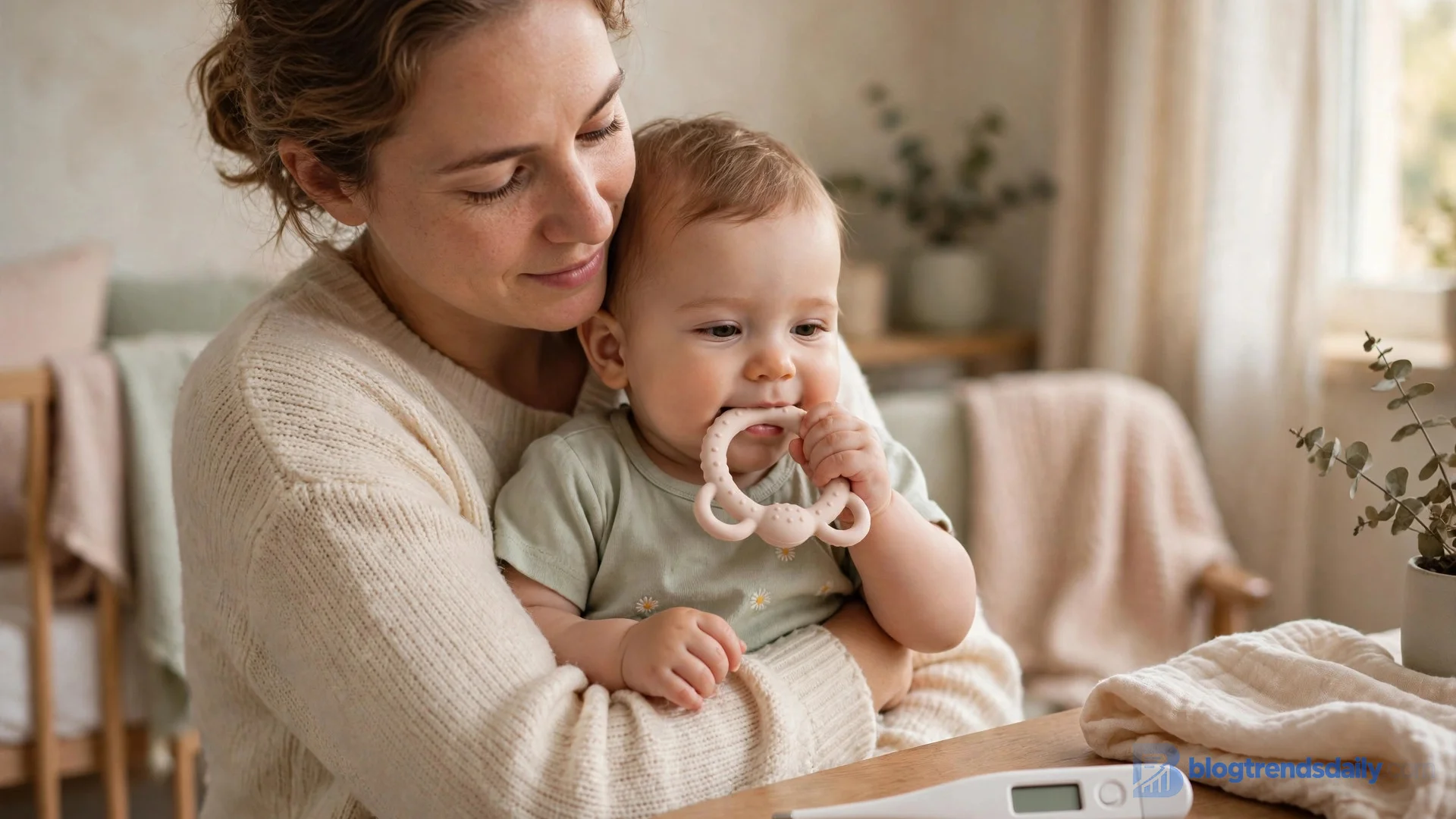
It is the middle of the night. Your baby is hot, cranky, and drooling all over your shoulder. You touch their forehead and think, “It must be teething.” Almost every parent has been there.
So, can teething cause fever? It is one of the most common questions new parents ask, and honestly, even grandmas and neighbors have strong opinions about it.
Here is the plain truth. Teething can make your baby fussy and uncomfortable, but pediatric experts say it does not cause a true fever. That matters, because a real fever can point to an infection that needs attention. If you blame a tooth for everything, you might miss something important.
I have spent 5 years writing about health topics, and I always check claims against trusted medical sources like the American Academy of Pediatrics (AAP). This guide breaks it all down in simple words, so you know what is normal and what is not.
In this guide you will learn:
- What experts say about teething and fever
- Why so many parents believe teething causes a high temperature
- How to tell teething symptoms from signs of illness
- A simple 4 step method to check your baby calmly
- Exactly when to call the doctor
Let us get to the answer.
Can Teething Cause Fever? The Short Answer
No, teething does not cause a true fever. The AAP says research shows teething does not cause a real fever. However, it can cause a small rise in body temperature that stays in the normal range.
What the AAP Says
In its guide on fever and your baby, the AAP explains that teething may cause a slight rise in temperature, but not a true fever. Another AAP page on teething pain says that extensive studies show fever is a false sign of teething.
Why a Slight Warmth Can Happen
Your baby may feel a little warm when they are fussy and crying. Crying, being held close, and wearing lots of layers can all raise body heat a bit. That does not mean they have a fever.
What Counts as a Real Fever?

A fever is usually a temperature of 100.4°F (38°C) or higher, measured rectally. A rectal reading is the most accurate for babies, especially those under 3 months old. If your baby’s temperature is at or above that line, it is not just teething. Something else is going on.
Why Do So Many Parents Think Teething Causes Fever?
If experts say no, why does this belief stick around? There are a few simple reasons.
The Timing Is a Coincidence
Teething usually starts around 4 to 7 months, and the first tooth often appears between 6 and 12 months. This is also the age when babies start grabbing everything and putting it in their mouths. If you want the full age range, read our main guide on when do babies start teething.
More Germs Go Into the Mouth
The AAP points out that teething does not weaken your baby’s immune system. But babies who are teething chew on toys, fingers, and almost anything else. That means more germs get in, and more colds and infections can follow. The cold causes the fever, not the tooth.
Teething Looks Like Being Sick
Teething can cause drooling, fussiness, poor sleep, and sore gums. Illness can cause some of the same things. When both happen at once, it is easy to blame the tooth. That is the trap many parents fall into.
Teething Symptoms vs Real Fever Signs
Let us make this easy to sort out. Think of two lists. One is what teething can do. The other is what teething does not do.
What Teething Can Cause
According to the AAP, these are common:
- Extra drool
- Chewing on toys and hands
- Mild fussiness or crying
- Sore, swollen gums
- A mild rash on the chin from drool
If you want a closer look at how the gums change, see our guide on normal baby gums vs teething gums.
What Teething Does Not Cause
Healthline notes that a rectal temperature of 100.4°F (38°C) or higher, vomiting, or diarrhea are not usually signs of teething. If you see these, call your pediatrician.
The Fever Check Method

When your baby feels hot and you are not sure why, use this simple routine. I call it The Fever Check Method.
- Take a real temperature. Do not guess by touch. Use a digital thermometer. For babies under 3 months, a rectal temperature is the most accurate.
- Write it down. Note the number, the time, and how you measured it.
- Look at the whole baby. Is your baby feeding, playing a little, and smiling? Or are they very sleepy, limp, or refusing to eat?
- Decide what to do. If the number is at or above 100.4°F, or your baby looks unwell, call your doctor. Do not wait for a tooth to show.
Pro Tip: Keep a thermometer in an easy to reach spot and save your pediatrician’s number in your phone. At 2 a.m., you will thank yourself.
When to Call the Doctor About Your Baby’s Fever
This is the most important part. Please read it slowly.
If Your Baby Is Under 3 Months
The AAP says that if your baby is 3 months old or younger and has a rectal temperature of 100.4°F (38°C) or higher, call your pediatrician right away. Do this even if your baby seems fine otherwise. Young babies can get seriously ill very fast.
If Your Baby Is Older
For older babies, the numbers are a bit higher. The AAP says you may need to call the doctor if a baby between 3 and 6 months has a fever of 101°F (38.3°C) or more, or if a baby older than 6 months has a temperature of 103°F (39.4°C) or more. Your doctor may give you different numbers, so always follow their advice.
Other Warning Signs
Call your doctor if your baby has any of these along with a fever:
- A fever that lasts more than a day or two
- Diarrhea or vomiting
- Not eating or drinking, or signs of dehydration
- Looks very sleepy, limp, or very hard to wake
- A new rash
- Trouble breathing
A Real Life Example

Think of a dad named Peter. His 8 month old has been drooling and cranky for two days. He assumes it is teething. That night, the baby feels hot, and a thermometer reading says 102°F. Imran remembers that teething does not cause a true fever, so he calls the pediatrician. The doctor finds an ear infection and gives the right treatment. A tooth had nothing to do with it.
How to Comfort Your Baby at Home
If there is no fever and your baby seems like they are simply teething, home comfort often works well.
Safe Ways to Soothe Sore Gums
- Rub your baby’s gums gently with a clean finger
- Offer a cold, wet washcloth or a chilled teething ring (not frozen solid)
- Keep their chin dry to prevent drool rash
- Give extra cuddles and quiet time
What to Avoid
The AAP advises against teething gels with numbing medicine, teething tablets, and amber necklaces. Never give aspirin to a baby. Before giving any medicine, even a common pain reliever, ask your pediatrician about the right choice and dose for your baby’s age and weight.
Keep Teeth Care in Mind

Once a tooth appears, start brushing right away. If you are curious about what comes next, our baby teeth chart shows the usual order and timing.
FAQs About Teething and Fever
Can teething cause fever?
No, teething does not cause a true fever. The AAP says it may cause a slight rise in temperature that stays in the normal range. If your baby’s temperature is 100.4°F (38°C) or higher, look for another cause and call your doctor.
Does teething cause fever in babies at 6 months?
No, a 6 month old with a real fever does not have a teething problem alone. Six months is a common age for first teeth, but the fever is likely from a cold or infection. Check with your pediatrician.
What is a teething temperature?
A teething temperature is just a small rise in body warmth that stays in the normal range. It is not a real fever. A true fever is 100.4°F (38°C) or higher when measured rectally.
How high can a teething fever go?
A true fever is not caused by teething, so there is no safe “teething fever” number. If your baby’s temperature reaches 100.4°F (38°C) or more, treat it as a possible illness and speak to your doctor.
Can teething cause diarrhea or vomiting?
No, these are not usual signs of teething. Healthline notes that vomiting and diarrhea are not typical teething symptoms. Call your pediatrician if your baby has them.
What are the real signs of teething?
The most common signs are drooling, chewing on things, fussiness, and sore or swollen gums. For a closer look, read about normal baby gums vs teething gums.
When should I call the doctor for a baby’s fever?
Call right away if your baby is under 3 months and has a rectal temperature of 100.4°F or higher. For older babies, call if the fever is high, lasts more than a day or two, or comes with other worrying signs.
Can I give my teething baby medicine?
Ask your pediatrician first. They can tell you what is safe and the right dose for your baby’s age and weight. Never give aspirin to a baby.
How long does teething last?
Teething can go on for a couple of years, because baby teeth keep coming in until around age 3. Each tooth only causes a few days of discomfort. See our baby teeth chart for the full timeline.
Conclusion
So, can teething cause fever? The answer from pediatric experts is no. Teething can cause a slightly warm baby, but not a true fever.
Three things to remember. First, a temperature of 100.4°F or higher is not from teething. Second, babies under 3 months with a fever need a doctor right away. Third, when you are unsure, trust your gut and call your pediatrician.
Teething is a normal part of growing up. Keep your baby comfortable, watch for real signs of illness, and do not blame every cry on a tooth. For more on the full journey, see our pillar guide on when do babies start teething.
Next steps:
- Keep a digital thermometer and your pediatrician’s number handy
- Try The Fever Check Method the next time your baby feels warm
- Read our baby teeth chart to know what to expect next
This article is for general information and is not medical advice. Always talk to your pediatrician about your baby’s health, especially if your baby has a fever.

Daniel Whitmore is the founder and main writer of blogtrendsdaily.com. With five years of experience writing and publishing online content, Daniel started the blog to give readers clear, honest and easy to follow guides on education, careers, health, technology, travel, fashion, beauty and fitness, automotive and trending topics.



Post Comment